
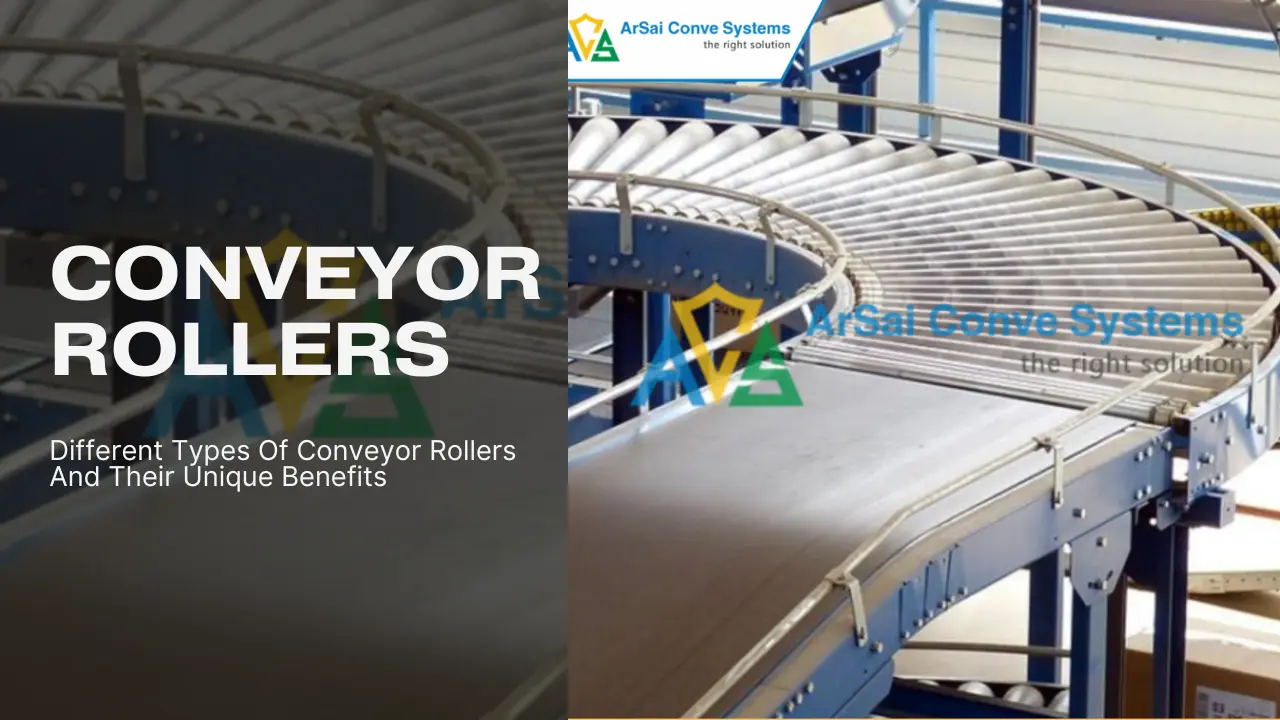
Conveyor systems are the backbone of modern material handling. From manufacturing plants to warehouses and mining sites, conveyors help move goods efficiently and safely. At the heart of every conveyor system are conveyor rollers. Choosing the right roller type directly impacts system performance, durability, and operating cost.
In this detailed guide, ArSai Conveyor Systems Pvt. Ltd. explains the different types of conveyor rollers and their unique benefits, helping you select the right solution for your application.
What Are Conveyor Rollers?
Conveyor rollers are cylindrical components that allow materials to move smoothly along a conveyor line. They support loads, reduce friction, and ensure controlled movement of products. Rollers are widely used in roller conveyor systems and also play a key role as conveyor belt rollers in belt-driven systems.
Rollers vary based on material, load capacity, design, and application, making it important to understand the available types of rollers before making a decision.
Why Are Conveyor Rollers Important in Material Handling?
High-quality industrial conveyor rollers improve productivity and reduce downtime. Their main benefits include:
- Smooth and controlled material movement
- Reduced wear on conveyor belts
- Lower power consumption
- Increased system lifespan
- Improved safety and efficiency
Whether you are looking for rollers for conveyor upgrades or brand-new installations, selecting the right roller type is critical.
Different Types of Conveyor Rollers and Their Benefits
1. Gravity Conveyor Rollers
Gravity rollers operate without motors and rely on gravity or manual force to move items.
Benefits:
- Cost-effective solution
- Low maintenance
- Ideal for warehouses and packing lines
Gravity rollers are commonly used in roller conveyor setups for cartons, boxes, and lightweight products.
2. Driven Conveyor Rollers
Driven rollers are powered by motors and chains or belts, making them suitable for continuous movement.
Benefits:
- Consistent speed control
- Suitable for heavy loads
- High operational efficiency
These rollers are widely used in automated production lines and distribution centers.
3. Conveyor Belt Rollers
Conveyor belt rollers support and guide the conveyor belt while reducing friction.
Benefits:
- Smooth belt operation
- Reduced belt wear and tear
- Increased belt life
They are essential components in belt conveyor systems across industries such as cement, logistics, and food processing.
4. Industrial Conveyor Rollers
Industrial conveyor rollers are designed for heavy-duty applications and harsh environments.
Benefits:
- High load-bearing capacity
- Long operational life
- Resistant to heat, dust, and impact
These rollers are commonly used in steel plants, power plants, and heavy manufacturing units.
5. Mining Conveyor Rollers
Mining conveyor rollers are specially engineered for extreme conditions found in mining operations.
Benefits:
- Strong and rugged construction
- High resistance to abrasion and corrosion
- Reliable performance in dusty and wet conditions
They play a crucial role in transporting ores, coal, and minerals over long distances.
6. Rubber-Coated Conveyor Rollers
These rollers have a rubber coating that improves grip and reduces noise.
Benefits:
- Excellent traction
- Reduced slippage
- Quieter operation
They are ideal for fragile items and inclined conveyor systems.
7. Stainless Steel Conveyor Rollers
Stainless steel rollers are used where hygiene and corrosion resistance are critical.
Benefits:
- Rust-resistant
- Easy to clean
- Suitable for food and pharmaceutical industries
These rollers meet strict hygiene and safety standards.
8. Impact Conveyor Rollers
Impact rollers are placed at loading points to absorb shock.
Benefits:
- Protect conveyor belt from damage
- Reduce material spillage
- Extend system life
They are commonly used in mining and bulk material handling systems.
How to Choose the Right Conveyor Rollers
When selecting rollers for conveyor systems, consider the following factors:
- Load capacity
- Material type
- Operating environment
- Conveyor speed
- Maintenance requirements
Choosing the correct roller improves efficiency and minimizes breakdowns.
Conveyor Rollers for Sale: What to Look For
If you are searching for conveyor rollers for sale, always ensure:
- High-quality raw materials
- Precision manufacturing
- Proper sealing and bearings
- Compatibility with your conveyor system
Reliable manufacturers offer customized roller solutions to match specific industry needs.
Roller Conveyor vs Belt Conveyor Rollers
| Feature | Roller Conveyor | Belt Conveyor Rollers |
|---|---|---|
| Movement | Rollers rotate to move items | Rollers support moving belt |
| Best For | Boxes, pallets | Bulk materials |
| Maintenance | Low | Moderate |
| Load Type | Discrete items | Continuous loads |
Applications of Conveyor Rollers Across Industries
Conveyor rollers are used in:
- Manufacturing plants
- Warehouses and logistics centers
- Mining and mineral processing
- Packaging and assembly lines
- Food and pharmaceutical industries
Each application requires a specific roller type for best results.
Conclusion
Understanding the different types of conveyor rollers and their unique benefits helps you design efficient and long-lasting conveyor systems. From gravity rollers to mining conveyor rollers, each type serves a specific purpose and offers distinct advantages.
If you are planning to install a new system or upgrade an existing one, choosing the right industrial conveyor rollers ensures smooth operations, reduced maintenance, and higher productivity.
With the right roller selection, your conveyor system can deliver consistent performance even in demanding industrial environments.