

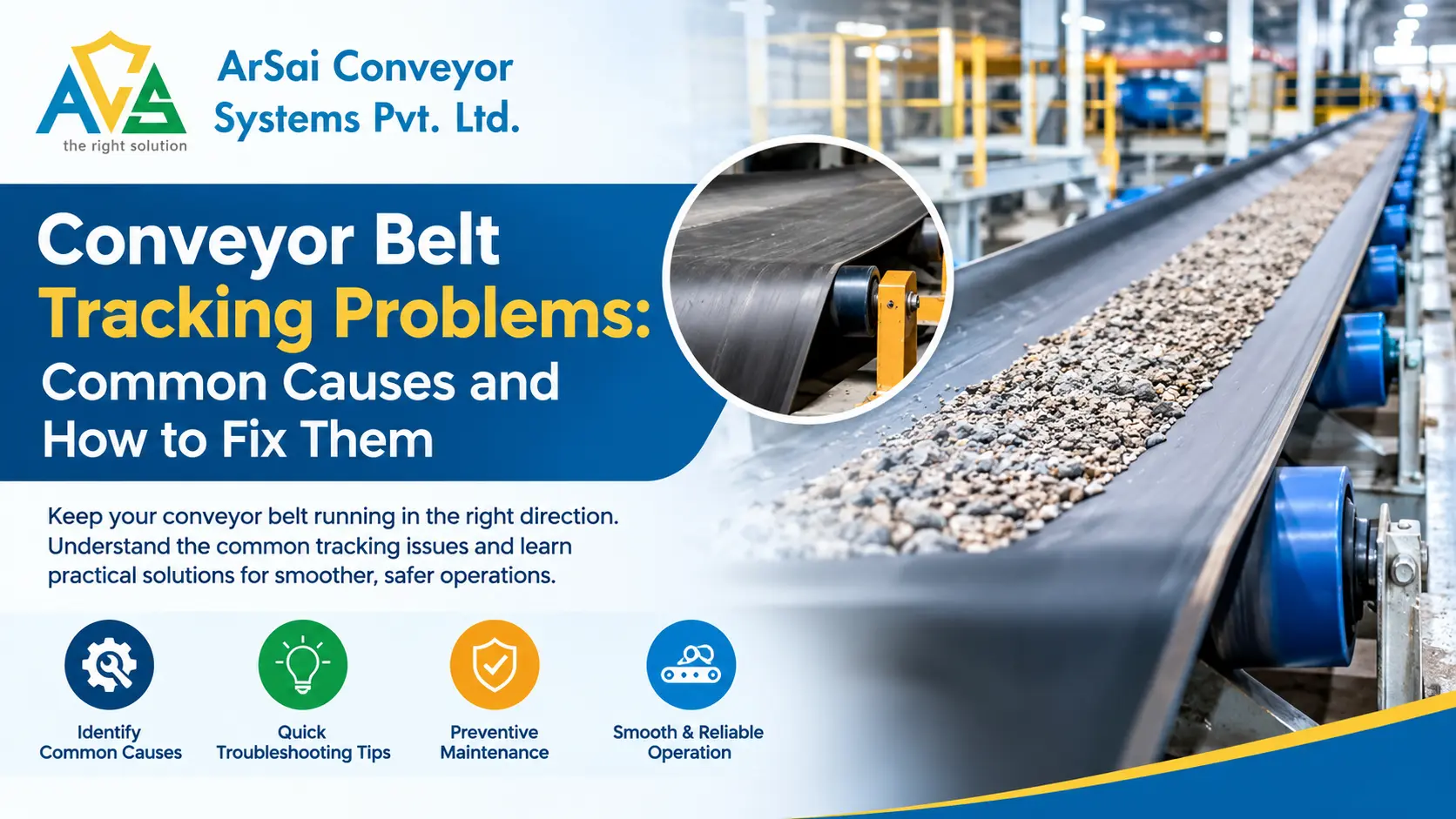
A conveyor belt plays an important role in moving materials smoothly across manufacturing plants, warehouses, packaging units, and other industrial facilities. However, when the belt starts moving towards one side instead of running along the centre of the conveyor, it can affect the entire operation. Poor alignment may cause material spillage, edge damage, increased friction, and unnecessary maintenance costs.
Understanding conveyor belt tracking problems helps operators identify the reasons behind belt misalignment before the issue becomes more serious. Correct conveyor belt tracking keeps the belt running along its intended path, improves material handling, and reduces avoidable downtime.
For businesses using industrial conveyor systems, knowing the common causes of tracking issues and the right corrective measures can make routine maintenance more effective.
What Is Conveyor Belt Tracking?
Conveyor belt tracking refers to the process of keeping a moving belt centred on the conveyor structure as it travels over pulleys, idlers, and other supporting components. A properly tracked belt moves consistently without rubbing against the frame or slipping off its intended path.
Tracking problems can occur in different types of conveyor systems, including belt conveyors used for manufacturing, packaging, material transfer, and bulk handling. Even a small alignment issue can become more noticeable when the conveyor operates continuously or carries unevenly distributed loads.
Effective tracking depends on correct conveyor installation, pulley alignment, suitable belt tension, clean components, and proper material loading. These factors work together to keep the belt stable during operation.
Also Read: What Is a Power and Free Conveyor System? Working, Benefits and Applications
Common Conveyor Belt Tracking Problems and Their Causes
1. Belt Moving Towards One Side
One of the most common tracking issues occurs when the belt consistently drifts towards the left or right side of the conveyor.
Possible causes:
- Misaligned pulleys or idlers
- Uneven belt tension
- Incorrectly positioned conveyor components
- Uneven material distribution across the belt
How to fix it: Inspect the conveyor structure and check whether the pulleys and idlers are correctly aligned. Examine belt tension and ensure material is loaded near the centre. Make adjustments according to the conveyor manufacturer’s instructions rather than randomly shifting rollers.
2. Belt Edge Damage
When a conveyor belt repeatedly rubs against the frame or supporting structure, its edges may become frayed, worn, or damaged.
Possible causes:
- Incorrect belt tracking
- Damaged or worn idlers
- Improper belt width or installation
- Loose structural components
How to fix it: Check for contact between the belt edges and the conveyor frame. Inspect idlers, pulleys, and mounting points for wear or displacement. Replace damaged components and correct the alignment before returning the system to normal operation.
3. Material Spillage from the Conveyor Belt
Material spilling from the sides can indicate that the belt is not tracking properly or that the load is not being distributed evenly.
Possible causes:
- Belt misalignment
- Off-centre loading at the transfer point
- Excessive material feed
- Incorrectly positioned chutes or guides
How to fix it: Check the loading point and adjust the material feed so that products or bulk material land near the belt centre. Inspect transfer chutes and loading equipment. If the belt continues to drift, investigate alignment and tension instead of relying only on side guides.
4. Uneven Belt Tension
A conveyor belt requires appropriate tension to operate consistently. If the tension differs across the belt width or is incorrectly set, the belt may move unpredictably.
Possible causes:
- Incorrect take-up adjustment
- Belt stretching during operation
- Uneven tensioning
- Worn or damaged tensioning components
How to fix it: Inspect the take-up arrangement and check belt tension against the manufacturer’s specifications. Adjust the system evenly and examine components for wear. Avoid excessive tension because it can increase stress on the belt, bearings, and pulleys.
5. Dirty Pulleys and Idlers
Accumulated dust, sticky material, grease, or product residue can interfere with the contact between the belt and its supporting components.
Possible causes:
- Inadequate cleaning
- Material buildup around pulleys
- Damaged belt scrapers
- Poor housekeeping near transfer points
How to fix it: Clean the affected components using a method suitable for the material and operating environment. Inspect belt cleaners and replace worn parts where necessary. Always isolate the conveyor and follow lockout/tagout procedures before cleaning or maintenance.
Conveyor Belt Tracking Troubleshooting: A Practical Approach
A systematic approach to conveyor belt tracking troubleshooting helps identify the actual cause instead of repeatedly adjusting components without a clear diagnosis.
- Inspect the belt path: Look for signs of rubbing, edge damage, uneven movement, or material spillage.
- Check the conveyor structure: Verify that the frame, pulleys, and idlers are properly aligned.
- Examine belt condition: Look for damaged edges, uneven wear, contamination, or belt deformation.
- Review belt tension: Confirm that the tensioning arrangement is working correctly and follows the manufacturer’s recommendations.
- Check material loading: Ensure the incoming material is distributed evenly and does not push the belt towards one side.
- Correct the identified issue: Adjust or replace the relevant components only after identifying the likely cause.
- Verify the result: After maintenance, test the conveyor under controlled conditions and confirm that the belt remains stable throughout its travel.
For safety, inspections and adjustments near moving components should only be carried out by trained personnel using approved procedures. Never attempt to manually push or reposition a moving belt.
How to Track a Conveyor Belt Correctly
If you are wondering how to track a conveyor belt, start by checking the conveyor manufacturer’s alignment and adjustment instructions. There is no single adjustment that works for every conveyor because tracking behaviour depends on the belt construction, pulley arrangement, conveyor length, and operating conditions.
Begin with the conveyor stopped and isolated. Inspect the pulleys, idlers, belt condition, and frame alignment. Correct any structural issues before making fine tracking adjustments.
Where the design permits, trained maintenance personnel can make small, controlled adjustments to the appropriate tracking components. Observe how the belt responds after each adjustment rather than making several changes simultaneously. This helps establish which correction is effective.
When tracking a conveyor belt, also consider the operating load. A belt may appear centred when empty but drift once material enters the conveyor. Therefore, tracking should be verified under appropriate operating conditions, following the equipment manufacturer’s safety procedures.
How to Track Conveyor Belt Movement Over Time
Knowing how to track conveyor belt movement consistently is just as important as correcting an existing problem. Routine monitoring helps maintenance teams identify changes before they lead to serious belt damage.
Operators should observe whether the belt remains centred, whether material is spilling, and whether unusual noise or vibration develops. Maintenance teams can record recurring misalignment, the location where it begins, loading conditions, and any adjustments made.
If the belt repeatedly moves off-centre at the same point, investigate the components and conditions in that area. Repeatedly adjusting the same roller without addressing the underlying cause may only provide temporary improvement.
A planned inspection schedule, proper cleaning, and timely replacement of worn components help maintain reliable conveyor performance.
Preventive Maintenance Tips for Better Conveyor Belt Tracking
Preventive maintenance can reduce the likelihood of recurring tracking problems and help extend conveyor belt service life.
- Inspect alignment regularly: Check pulleys, idlers, and the conveyor frame for displacement or wear.
- Maintain proper belt tension: Follow the recommended tension settings for the specific conveyor.
- Keep components clean: Prevent material buildup on pulleys, rollers, and belt-cleaning equipment.
- Load materials evenly: Keep products or bulk materials centred during transfer.
- Replace worn parts promptly: Damaged idlers, bearings, and pulleys can contribute to tracking problems.
- Train operators: Help operators recognise early warning signs and report unusual belt movement.
- Maintain inspection records: Track recurring problems, repairs, and maintenance activities to identify patterns.
Conclusion
Conveyor belt tracking problems can affect productivity, material handling accuracy, and equipment life if they are not addressed promptly. Misaligned pulleys, uneven tension, dirty rollers, damaged components, and off-centre loading are common causes that require proper inspection and corrective action.
A structured approach to conveyor belt tracking troubleshooting helps maintenance teams identify the underlying issue and apply suitable corrections. By understanding how to track a conveyor belt, monitoring its movement, and following a preventive maintenance schedule, businesses can improve conveyor reliability and reduce unnecessary downtime.
ArSai Conveyor Systems Pvt. Ltd. recognises the importance of dependable material handling equipment for industrial operations. Selecting a suitable conveyor system and maintaining it according to its design requirements helps support smooth material movement and consistent production performance.