

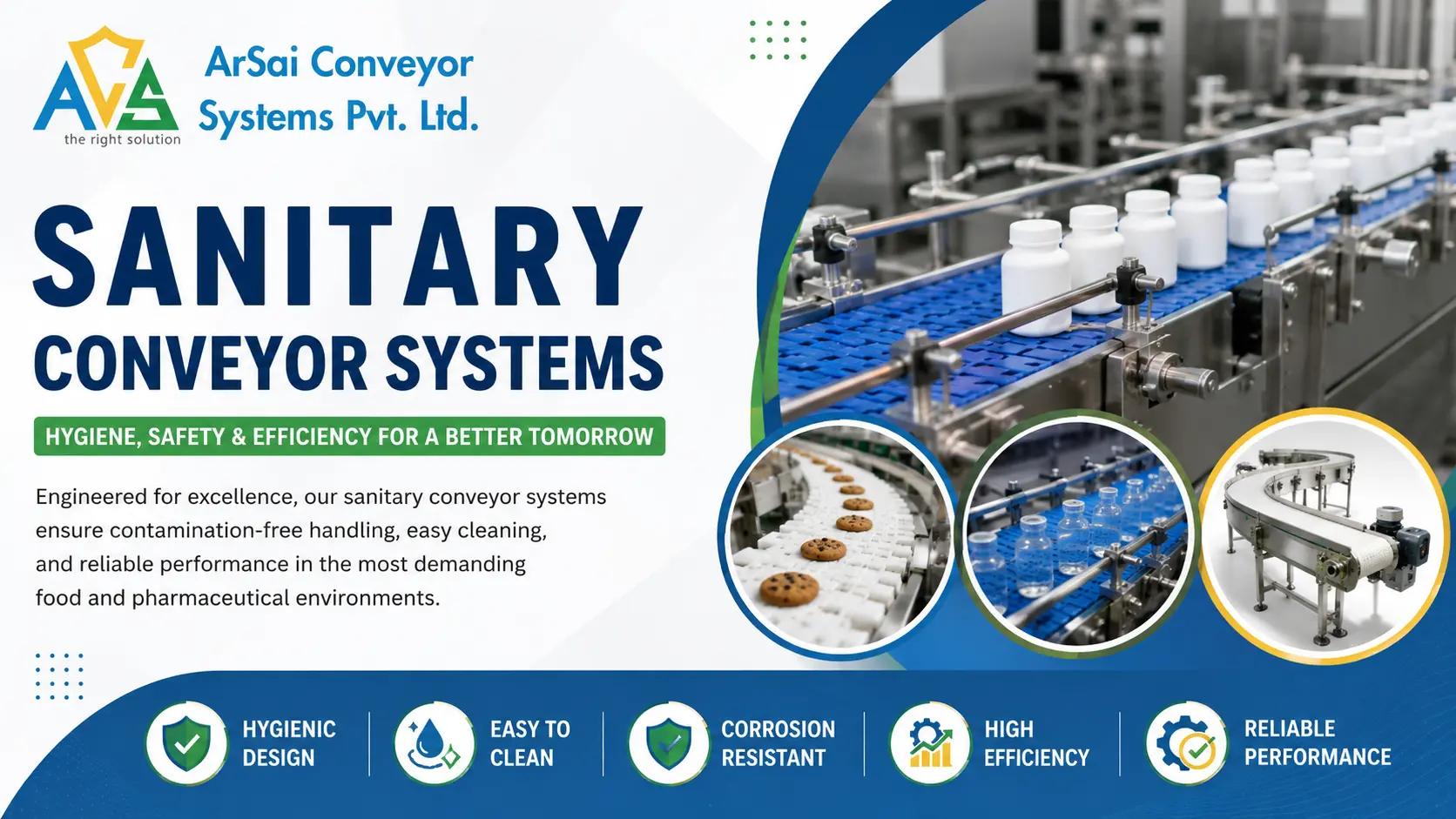
Maintaining hygiene and product safety is a top priority in industries such as food processing, pharmaceuticals, beverages, dairy, and nutraceutical manufacturing. In these sectors, even minor contamination can result in product recalls, regulatory penalties, and loss of consumer trust. This is where sanitary conveyor systems play a critical role.
Unlike conventional conveying equipment, sanitary conveyors are specifically designed to meet strict cleanliness and hygiene standards. They help transport products safely while minimizing the risk of contamination and ensuring compliance with industry regulations. As food and pharmaceutical manufacturing standards continue to evolve, investing in a reliable sanitary conveyor system has become essential for modern production facilities.
What Are Sanitary Conveyor Systems?
Sanitary conveyor systems are specially engineered material handling solutions designed for environments where cleanliness, hygiene, and product integrity are critical. These systems are commonly manufactured using stainless steel and feature smooth surfaces, hygienic welds, and easy-to-clean designs.
The primary purpose of a sanitary conveyor is to transport products efficiently while preventing the accumulation of dust, bacteria, moisture, and contaminants.
Sanitary conveyors are widely used in:
- Food processing plants
- Pharmaceutical manufacturing facilities
- Dairy industries
- Beverage production units
- Bakery and confectionery plants
- Nutraceutical manufacturing
- Cosmetic industries
These industries require equipment that supports strict sanitation procedures and meets regulatory requirements.
Also Read: What Is an Automated Material Handling System
Why Hygiene Matters in Food and Pharmaceutical Industries
Food and pharmaceutical products are directly consumed by people, making contamination prevention a critical concern. Any exposure to harmful microorganisms, foreign particles, or chemical contaminants can compromise product quality and consumer safety.
Poor hygiene in production facilities can lead to:
- Product spoilage
- Microbial contamination
- Regulatory violations
- Product recalls
- Financial losses
- Damage to brand reputation
Implementing sanitary conveyor systems helps manufacturers maintain a clean production environment and reduce contamination risks throughout the manufacturing process.
Key Features of Sanitary Conveyors
Modern sanitary conveyors are designed with several specialized features that support hygienic operations.
Stainless Steel Construction
Most sanitary conveyor systems are built using high-grade stainless steel, which offers excellent corrosion resistance and durability. Stainless steel surfaces are easy to clean and less likely to harbor bacteria.
Smooth Surface Design
Sharp edges, crevices, and gaps can trap food particles and contaminants. Sanitary conveyors feature smooth surfaces that prevent product accumulation and simplify cleaning procedures.
Easy Washdown Capability
Many sanitary conveyor systems are designed for frequent washdowns using water, steam, or approved cleaning agents. This feature helps maintain hygiene standards without affecting equipment performance.
Hygienic Belt Materials
The belts used in sanitary conveyors are often manufactured from food-grade materials that comply with industry safety standards. These materials resist contamination and support easy cleaning.
Open Frame Construction
Open-frame designs improve accessibility for inspection, cleaning, and maintenance, helping operators maintain high sanitation standards.
Importance of Sanitary Conveyor Systems in Food Processing
Food processing facilities handle a wide range of products, including fruits, vegetables, meat, poultry, dairy products, bakery items, snacks, and packaged foods. Maintaining cleanliness throughout production is essential for ensuring food safety.
Preventing Cross-Contamination
One of the biggest advantages of sanitary conveyor systems is their ability to minimize cross-contamination between products. This is especially important in facilities processing multiple product categories.
Maintaining Product Quality
Sanitary conveyors help preserve product freshness and quality by reducing exposure to contaminants during transportation.
Supporting Regulatory Compliance
Food manufacturers must comply with various safety standards and regulations. Properly designed sanitary conveyor systems support compliance with industry requirements and quality management systems.
Improving Operational Efficiency
Modern sanitary conveyors enable smooth and continuous product movement, helping food manufacturers increase productivity while maintaining hygiene standards.
Importance of Sanitary Conveyor Systems in Pharmaceutical Manufacturing
The pharmaceutical industry operates under some of the strictest quality and cleanliness requirements. Even the smallest contamination can affect product efficacy and patient safety.
Ensuring Product Purity
Sanitary conveyor systems help maintain a controlled production environment by minimizing exposure to contaminants during manufacturing and packaging processes.
Supporting Good Manufacturing Practices (GMP)
Pharmaceutical manufacturers follow Good Manufacturing Practices (GMP) to ensure consistent product quality. Hygienic conveying systems play a key role in meeting these standards.
Reducing Cleaning Time
Easy-to-clean sanitary conveyors reduce downtime associated with cleaning and sanitation procedures, improving overall production efficiency.
Enhancing Process Reliability
Reliable product transportation helps pharmaceutical facilities maintain consistent production schedules and product quality.
Benefits of Using Sanitary Conveyors
Investing in sanitary conveyors offers numerous advantages for both food and pharmaceutical industries.
Enhanced Hygiene
Sanitary conveyors are specifically designed to maintain cleanliness and reduce contamination risks throughout the production process.
Improved Product Safety
By preventing exposure to contaminants, sanitary conveyor systems help ensure consumer safety and product integrity.
Reduced Maintenance Requirements
The simple and hygienic design of sanitary conveyors often results in lower maintenance needs and easier inspections.
Increased Equipment Lifespan
Stainless steel construction and corrosion-resistant materials contribute to longer equipment life and reduced replacement costs.
Faster Cleaning Procedures
Easy-access designs allow operators to clean equipment quickly and efficiently, reducing production downtime.
Better Regulatory Compliance
Sanitary conveyor systems help manufacturers comply with industry hygiene and quality standards.
Applications of Sanitary Conveyor Systems
Sanitary conveyor systems are used across numerous production environments.
Food Industry Applications
- Bakery products
- Dairy processing
- Frozen foods
- Snack manufacturing
- Ready-to-eat meals
- Meat and poultry processing
- Beverage production
Pharmaceutical Industry Applications
- Tablet manufacturing
- Capsule production
- Medical device packaging
- Nutraceutical products
- Pharmaceutical ingredient handling
Their versatility makes sanitary conveyors an essential part of modern manufacturing operations.
Factors to Consider When Choosing a Sanitary Conveyor System
Selecting the right sanitary conveyor system is important for achieving optimal performance.
Key factors include:
- Product type
- Production capacity
- Cleaning requirements
- Conveyor belt material
- Environmental conditions
- Regulatory compliance needs
- Available installation space
Working with an experienced conveyor manufacturer helps businesses select the most suitable system for their specific applications.
Future Trends in Sanitary Conveyors
As industries continue to prioritize automation and food safety, sanitary conveyor technology is evolving rapidly.
Emerging trends include:
- Automated cleaning systems
- Smart monitoring technology
- Energy-efficient conveyor designs
- Advanced hygienic materials
- Integrated quality control systems
These innovations are helping manufacturers improve efficiency while maintaining the highest hygiene standards.
Conclusion
Sanitary conveyor systems have become an indispensable component of food and pharmaceutical manufacturing facilities. Their hygienic design, easy cleaning capabilities, and contamination prevention features help businesses maintain product quality, ensure regulatory compliance, and protect consumer safety.
Whether transporting food products, pharmaceuticals, nutraceuticals, or beverages, sanitary conveyors provide reliable and efficient material handling solutions. By investing in advanced sanitary conveyor systems, manufacturers can enhance operational efficiency, improve hygiene standards, and strengthen their competitive position in today’s quality-driven marketplace.

Pingback: 4 Types of Aggregate Conveyors and Their Industrial Applications