

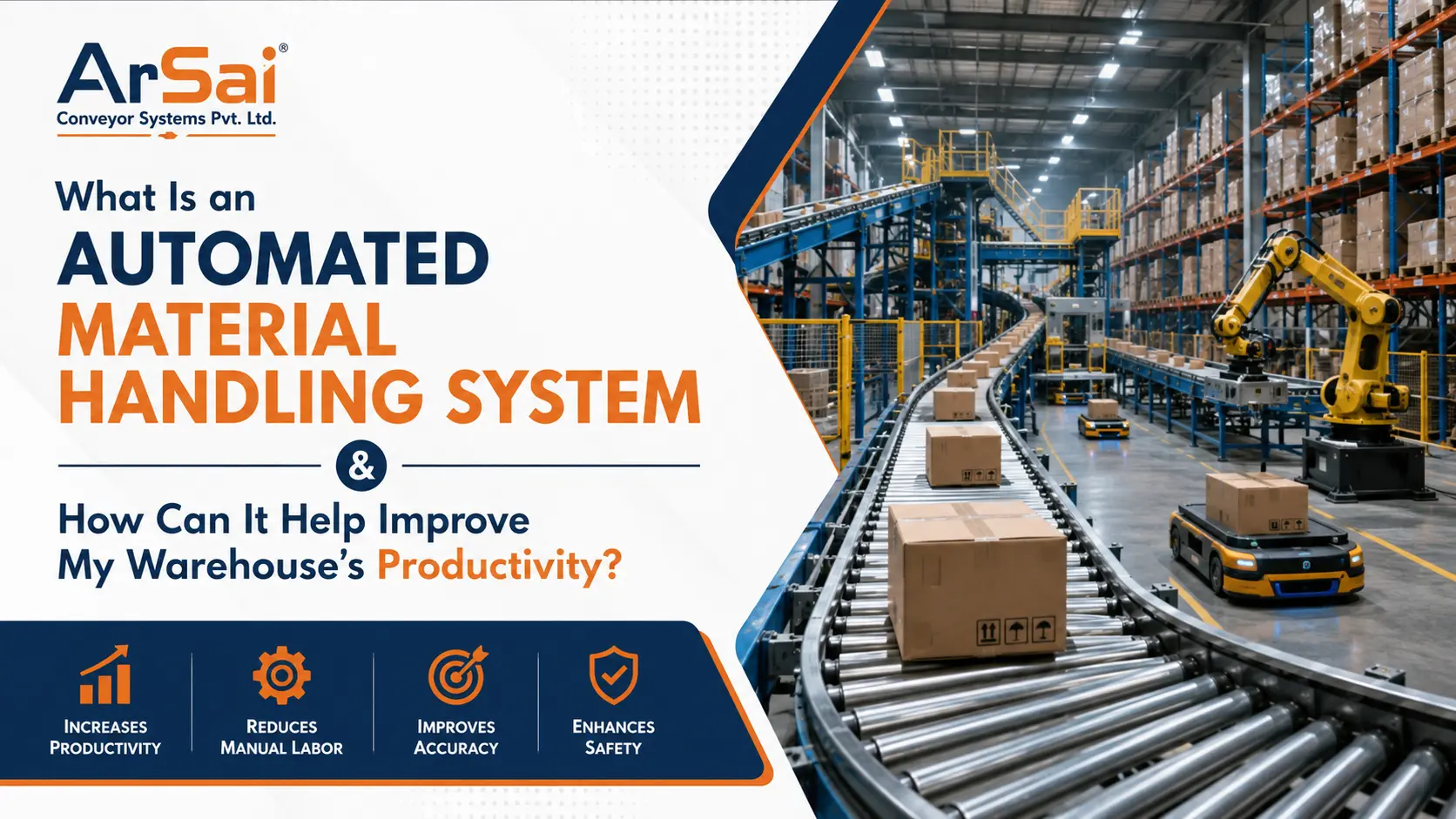
In today’s competitive business environment, warehouses and distribution centers are under constant pressure to process orders faster, reduce operational costs, and improve overall efficiency. As inventory volumes continue to grow and customer expectations increase, traditional manual handling methods are often no longer sufficient. This is where an automated material handling system becomes a valuable investment.
Modern warehouses are increasingly adopting automated material handling solutions to streamline operations, minimize errors, and maximize productivity. Whether you operate a manufacturing facility, e-commerce warehouse, logistics center, or distribution hub, automation can transform the way materials move throughout your facility.
In this blog, we will explore what an automated material handling system is, how it works, its key components, and how it can significantly improve warehouse productivity.
What Is a Material Handling System?
A material handling system refers to the equipment, processes, and technologies used to move, store, control, and protect materials throughout manufacturing, warehousing, distribution, and logistics operations.
The primary objective of a material handling system is to ensure that products and materials are transported efficiently from one point to another while minimizing manual effort and operational delays.
Material handling systems can be:
- Manual
- Semi-automated
- Fully automated
As businesses expand, many are shifting toward automation to improve performance and meet growing operational demands.
Also Read: How to Choose the Right Conveyor System for Your Industry
What Is an Automated Material Handling System?
An automated material handling system is an advanced solution that uses automated equipment, conveyors, sensors, controls, and software to move materials with minimal human intervention.
Instead of relying heavily on manual labor, automated systems perform repetitive material movement tasks quickly and accurately. These systems can transport goods between storage locations, production lines, packing stations, and shipping areas while maintaining a continuous workflow.
Automated systems help businesses optimize warehouse operations, improve inventory control, and increase throughput.
Key Components of Automated Material Handling Solutions
Modern automated material handling solutions typically consist of several integrated technologies working together.
Conveyor Systems
Conveyors are among the most common components of automated material handling systems.
They transport products efficiently between various workstations, storage areas, and processing zones.
Common conveyor types include:
- Belt conveyors
- Roller conveyors
- Slat conveyors
- Overhead conveyors
- Power and free conveyors
Automated Storage and Retrieval Systems (AS/RS)
These systems automatically store and retrieve inventory from designated storage locations.
Benefits include:
- Better space utilization
- Faster inventory access
- Improved inventory accuracy
Sortation Systems
Sortation equipment automatically directs products to their appropriate destinations based on predefined criteria.
These systems are commonly used in:
- E-commerce warehouses
- Distribution centers
- Courier hubs
Sensors and Control Systems
Sensors continuously monitor material movement and system performance. Control systems ensure smooth coordination between various pieces of equipment and help maintain operational efficiency.
Warehouse Management Software (WMS)
A warehouse management system integrates with automated equipment to provide real-time visibility into inventory, orders, and warehouse activities.
Why Warehouses Are Moving Toward Automation
Warehouses face several operational challenges, including labor shortages, rising costs, increasing order volumes, and growing customer expectations.
Automated material handling solutions help address these challenges by:
- Reducing manual labor dependency
- Improving workflow efficiency
- Increasing processing speed
- Minimizing human errors
- Enhancing inventory control
As a result, automation has become a critical component of modern warehouse management.
How an Automated Material Handling System Improves Warehouse Productivity
Faster Material Movement
Manual transportation of goods often creates delays and bottlenecks. An automated material handling system enables continuous product movement throughout the facility, reducing waiting times and improving workflow efficiency. This allows warehouses to process more orders within shorter timeframes.
Reduced Labor Costs
Labor expenses represent a significant portion of warehouse operating costs. By automating repetitive transportation tasks, businesses can reduce labor requirements and allocate employees to higher-value activities such as quality control, inventory management, and customer service.
Improved Order Accuracy
Manual handling can lead to picking errors, misplaced inventory, and incorrect shipments. Automated systems improve accuracy by ensuring products follow predefined routes and processes.
Higher accuracy leads to:
- Fewer returns
- Improved customer satisfaction
- Lower operational costs
Better Inventory Management
Inventory visibility is crucial for efficient warehouse operations. Automated systems provide real-time tracking of materials and products, helping businesses maintain accurate inventory records and reduce stock discrepancies. This enables better planning and decision-making.
Increased Throughput
Warehouse throughput refers to the number of products processed within a specific period. Automation increases throughput by eliminating delays associated with manual handling and ensuring a smooth flow of goods throughout the facility.
Higher throughput translates into greater operational efficiency and improved profitability.
Enhanced Workplace Safety
Material handling activities often involve heavy lifting, repetitive movements, and transportation of bulky items.
Automated systems reduce the need for manual handling, lowering the risk of workplace injuries and creating a safer working environment.
Better Space Utilization
Warehouse space is a valuable asset. Automated storage and handling systems help optimize available space by utilizing vertical storage areas and reducing unnecessary floor congestion. This allows businesses to store more inventory within the same facility footprint.
Industries Benefiting from Automated Material Handling Solutions
Automation is widely used across numerous industries.
E-Commerce and Retail
E-commerce businesses rely on automated systems to process large order volumes efficiently and meet fast delivery expectations.
Manufacturing
Manufacturers use automated material handling systems to transport raw materials, work-in-progress items, and finished goods throughout production facilities.
Logistics and Distribution
Distribution centers benefit from automated sorting, storage, and transportation systems that improve operational speed and accuracy.
Automotive Industry
Automotive manufacturers use conveyors and automated handling systems to support assembly lines and production processes.
Food and Beverage Industry
Automation helps ensure efficient handling of products while maintaining hygiene and safety standards.
Signs Your Warehouse Needs Automation
You may benefit from an automated material handling system if your warehouse experiences:
- Frequent shipping errors
- Labor shortages
- Increasing order volumes
- High operational costs
- Inventory inaccuracies
- Workflow bottlenecks
- Space limitations
These challenges often indicate that manual processes are limiting productivity and growth.
Factors to Consider Before Implementing Automation
Before investing in automation, businesses should evaluate:
- Warehouse Layout- The facility layout should support efficient equipment installation and material flow.
- Product Characteristics- Consider product size, weight, shape, and handling requirements.
- Business Growth Plans- Choose solutions that can accommodate future expansion and increasing demand.
- Integration Requirements- Ensure the automated system can integrate with existing warehouse management software and operational processes.
- Return on Investment (ROI)- Evaluate potential savings, productivity improvements, and long-term operational benefits.
Future of Automated Material Handling Systems
Technological advancements continue to drive innovation in warehouse automation.
Emerging trends include:
- Artificial Intelligence (AI)
- Robotics
- Autonomous Mobile Robots (AMRs)
- Internet of Things (IoT)
- Predictive maintenance technologies
These innovations are making automated material handling solutions even more efficient, flexible, and intelligent.
Conclusion
An automated material handling system is much more than a warehouse upgrade—it is a strategic investment that can significantly improve operational efficiency, productivity, accuracy, and profitability. By automating material movement and integrating advanced technologies, businesses can reduce labor costs, improve inventory management, increase throughput, and create safer working environments.
As warehouse operations become increasingly complex, investing in reliable automated material handling solutions can provide the competitive advantage needed to meet customer demands and support long-term business growth. Organizations that embrace automation today will be better positioned to succeed in the rapidly evolving logistics and warehousing landscape.
Pingback: Sanitary Conveyor Systems: Importance in Food and Pharmaceutical Industries