

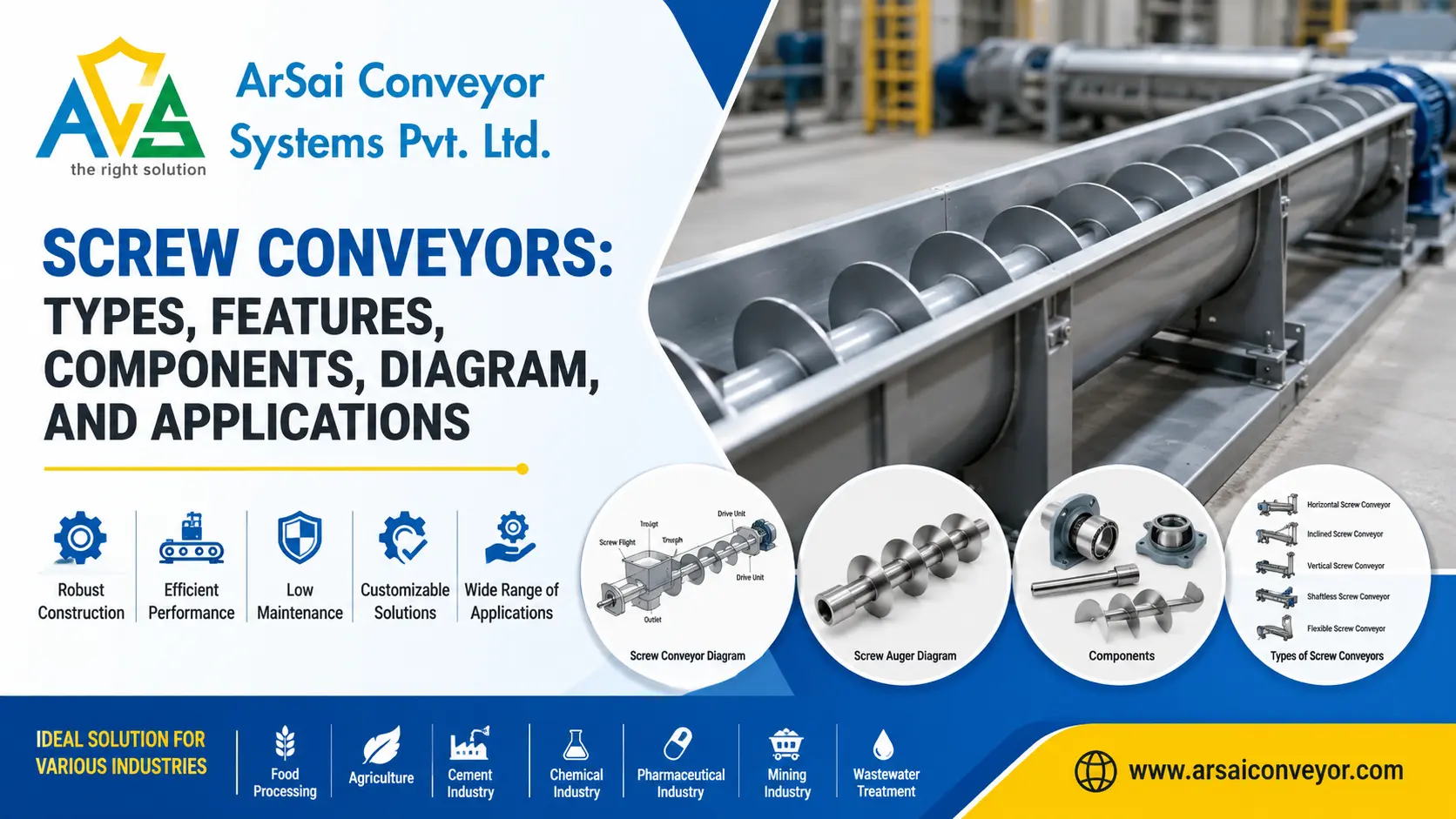
Material handling is an essential element of contemporary industry. The food processing industry, the cement industry, agriculture, mining, chemicals, pharmaceuticals, and wastewater management industries are just some of the industries that require the movement of bulk material from one location to another. One of the many types of conveying equipment used in industry is the screw conveyor.
Known for their simple design, low maintenance requirements, and versatility, screw conveyors are widely used across numerous industries. In this comprehensive guide, we will explore screw conveyor types, key components, working principles, screw conveyor diagram, features, and industrial applications.
What Is a Screw Conveyor?
A screw conveyor is a mechanical conveying system that uses a rotating helical screw blade, commonly known as a flight, to move bulk materials through a trough or enclosed tube. As the screw rotates, material is pushed forward along the conveyor’s length.
Screw conveyors can transport a wide variety of materials, including powders, granules, grains, chemicals, cement, ash, food products, and wastewater sludge.
Due to their compact design and ability to handle materials horizontally, vertically, or at an incline, screw conveyors have become an essential part of modern material handling systems.
Also Read: What are Overhead Conveyor Rotators? A Complete Guide to Their Working, Benefits & Applications
How Does a Screw Conveyor Work?
The operating principle of a screw conveyor is relatively simple.
- Bulk material is fed into the conveyor through an inlet.
- The rotating screw flight moves the material forward.
- The material travels along the conveyor trough or tube.
- The material is discharged at the outlet point.
The movement is generated by an electric motor connected to the screw shaft through a gearbox.
The efficiency of the system depends on factors such as screw diameter, pitch, rotational speed, and material characteristics.
Screw Conveyor Diagram
A basic screw conveyor diagram typically consists of the following components:
- Inlet Hopper
- Conveyor Trough or Tube
- Screw Flighting
- Center Shaft
- Bearings
- Drive Unit
- Gearbox
- Motor
- Discharge Outlet
- End Plates
Similarly, a screw auger diagram shows the rotating helical flight wrapped around a central shaft, illustrating how material moves through the conveyor during operation.
Understanding a screw conveyor diagram helps operators and maintenance teams identify key parts and ensure proper system performance.
Main Components of a Screw Conveyor
1. Screw Flight
The screw flight is the helical blade responsible for moving material through the conveyor. It is the most important component of the system.
2. Shaft
The shaft supports the screw flight and transfers rotational power from the drive unit.
3. Conveyor Trough
The trough houses the screw assembly and prevents material spillage during operation.
4. Bearings
Bearings support the rotating shaft and reduce friction.
5. Drive Unit
The drive unit includes the motor and gearbox that power the conveyor.
6. Inlet and Outlet Sections
These sections allow material to enter and exit the conveyor system efficiently.
7. Covers
Protective covers help prevent contamination and improve workplace safety.
Types of Screw Conveyor
There are several types of screw conveyor available to suit different material handling requirements.
1. Horizontal Screw Conveyor
This is the most commonly used conveyor design.
Features:
- Ideal for short to medium conveying distances
- Suitable for powders and granular materials
- Easy installation and maintenance
Applications:
- Food processing
- Cement plants
- Grain handling facilities
2. Inclined Screw Conveyor
Inclined conveyors transport materials upward at an angle.
Features:
- Space-saving design
- Suitable for elevated material transfer
- Controlled material flow
Applications:
- Agriculture
- Chemical processing
- Packaging industries
3. Vertical Screw Conveyor
Vertical screw conveyors are designed to lift materials vertically.
Features:
- Compact footprint
- Efficient vertical transportation
- Reduced floor space requirements
Applications:
- Grain elevators
- Industrial plants
- Bulk storage systems
4. Shaftless Screw Conveyor
One of the most advanced screw conveyor types, shaftless conveyors eliminate the central shaft.
Features:
- Handles sticky materials
- Reduced clogging
- Improved material flow
Applications:
- Wastewater treatment
- Sludge handling
- Food waste processing
5. Ribbon Screw Conveyor
Ribbon conveyors use specialized ribbon-shaped flights.
Features:
- Ideal for sticky materials
- Prevents material buildup
- Enhanced mixing capabilities
Applications:
- Chemical industry
- Food processing plants
- Fertilizer production
6. Flexible Screw Conveyor
Flexible conveyors use a rotating spiral inside a flexible tube.
Features:
- Adaptable routing
- Compact installation
- Easy handling of powders
Applications:
- Pharmaceutical industry
- Food manufacturing
- Chemical plants
Key Features of Screw Conveyors
- Simple Construction- Screw conveyors have fewer moving parts compared to many other conveying systems, resulting in reliable performance.
- Compact Design- Their compact structure allows installation in confined spaces.
- Low Maintenance- Because of their straightforward design, maintenance requirements are minimal.
- Dust-Free Operation- Enclosed screw conveyors help minimize dust emissions and maintain a cleaner working environment.
- Versatility- They can handle a wide variety of materials, from fine powders to coarse granules.
- Cost-Effective Solution- Screw conveyors offer excellent value for money due to lower installation and operating costs.
Advantages of Using Screw Conveyors
The growing popularity of various screw conveyor types can be attributed to several benefits:
- Continuous material flow
- High conveying efficiency
- Reduced labor requirements
- Compact footprint
- Easy integration with existing systems
- Reliable operation
- Customizable design options
- Safe material handling
These advantages make screw conveyors an ideal solution for both small-scale and large-scale industrial operations.
Industrial Applications of Screw Conveyors
- Food Industry- Screw conveyors are used for handling flour, sugar, grains, spices, and other food products.
- Agriculture- They transport seeds, animal feed, fertilizers, and harvested grains.
- Cement Industry- Cement plants use screw conveyors for moving cement, fly ash, and raw materials.
- Chemical Industry- Powders, pellets, and chemical compounds are efficiently transported using screw conveyors.
- Wastewater Treatment- Shaftless screw conveyors are widely used for sludge transportation and waste handling.
- Mining Industry- Mining operations utilize screw conveyors to transport minerals, ores, and processing materials.
- Pharmaceutical Industry- Flexible screw conveyors help transfer powders and ingredients while maintaining hygiene standards.
Factors to Consider When Selecting a Screw Conveyor
Before choosing a screw conveyor, consider the following:
- Material characteristics
- Moisture content
- Conveying distance
- Required capacity
- Inclination angle
- Operating environment
- Maintenance requirements
- Available installation space
Selecting the right conveyor ensures maximum efficiency and long-term reliability.
Maintenance Tips for Screw Conveyors
Regular maintenance helps improve performance and reduce downtime.
Recommended practices include:
- Inspecting bearings regularly
- Checking screw flight wear
- Monitoring motor performance
- Lubricating moving components
- Cleaning material buildup
- Inspecting covers and seals
Proper maintenance significantly extends equipment lifespan.
Conclusion
Screw conveyors are among the most efficient and versatile material handling systems used in modern industries. Understanding the various screw conveyor types, key components, working principles, and the importance of a screw conveyor diagram helps businesses select the right conveying solution for their operations.
Whether it is a horizontal conveyor, shaftless design, or flexible system, each type serves a specific purpose. By understanding the types of screw conveyor, reviewing a screw auger diagram, and considering application requirements, industries can improve productivity, reduce operational costs, and ensure smooth material transportation.
For businesses seeking a reliable and cost-effective bulk material handling solution, screw conveyors remain one of the most trusted choices across a wide range of industrial applications.


Pingback: How to Choose the Right Conveyor System for Your Industry